



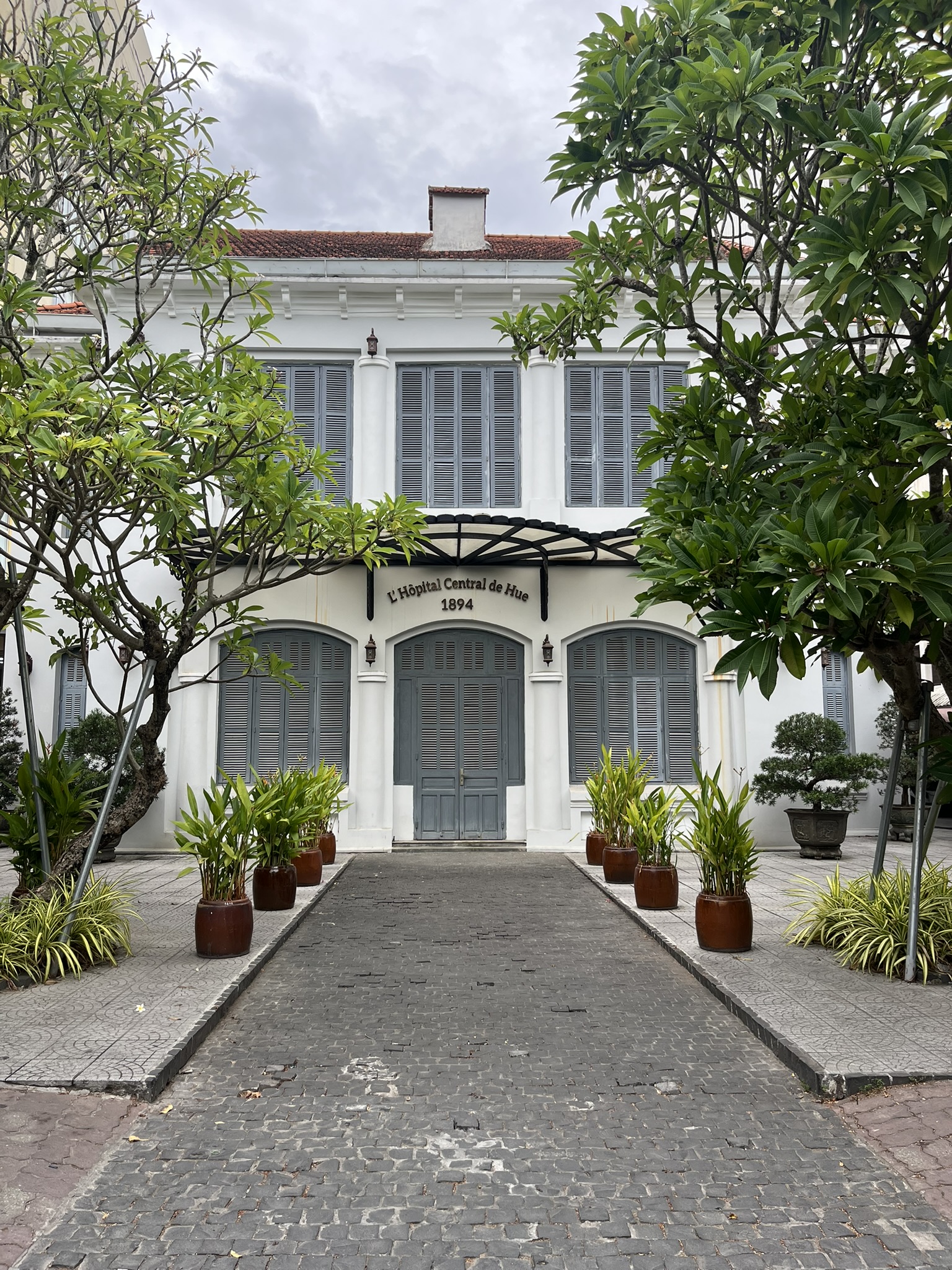
23 Sep Hue Central Hospital: An Oncology Culture That Begins With the Patient’s Journey
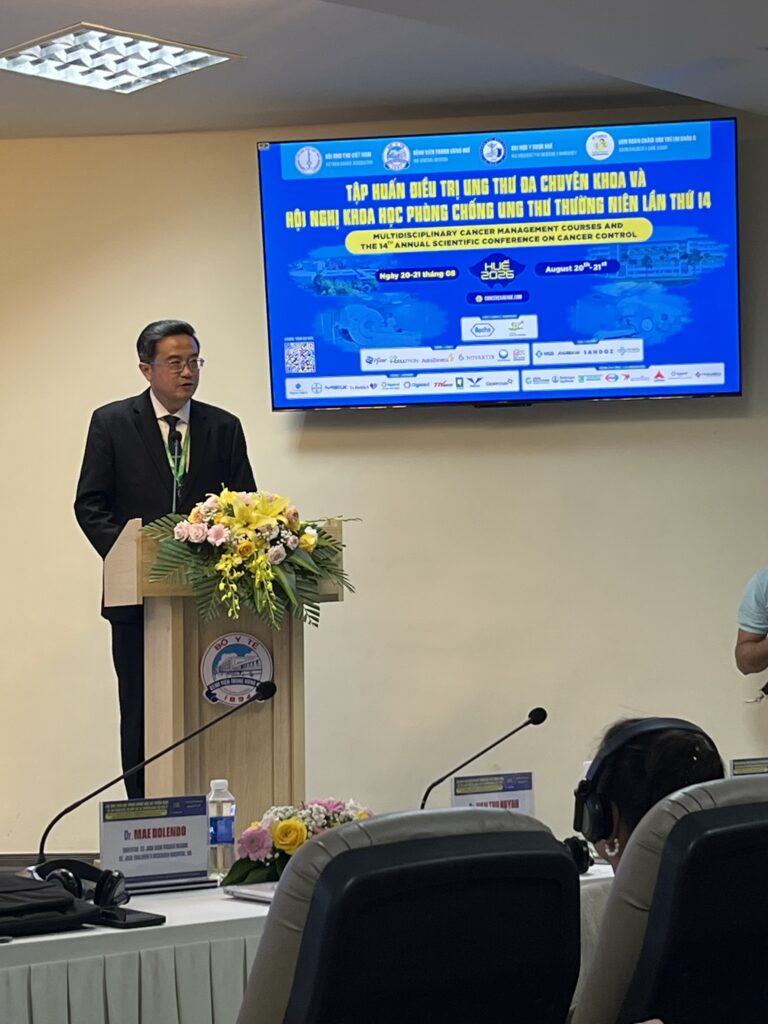
Reflections on the 14th Vietnamese Annual Scientific Conference on Cancer Control, Huế, 20–21 August 2026.
There is a particular kind of clarity that comes from attending a conference outside your own health system. You lose the shorthand. You have to listen to how other people frame the problem — and sometimes you discover they are framing it better than you are.That was my experience in Huế this August, at the 14th Vietnamese Annual Scientific Conference on Cancer Control. I arrived expecting a solid regional oncology meeting. I came away having spent two days inside a professional culture that thinks about the patient's journey as seriously as it thinks about the treatment itself.
The programme was the argument
You can usually read a professional community's priorities from its agenda, and this one made its case plainly.
There were the sessions you would expect at any major oncology meeting: lung cancer, HER2-positive breast cancer, precision medicine, the use of artificial intelligence in the clinic. The speaker list was properly international, teams from Vietnamese oncology hospitals sitting alongside colleagues from St. Jude, MD Anderson, Toronto, Singapore and Japan. What struck me was what sat alongside all of that: Palliative care, caregiver burden, communication with patients. Not relegated to a parallel track at eight in the morning, not framed as the soft complement to the hard science — given real space in the programme, discussed with the same seriousness as sequencing panels and treatment algorithms. And the conference opened by celebrating something concrete: the first twenty successful bone marrow transplants in patients with thalassemia.
Not a projection, not a strategic plan. Twenty patients, one at a time.
The numbers behind the room
It helps to know what those two days sit on top of.
Vietnam saw an estimated 177,404 new cancer cases and 111,015 cancer deaths in 2024, according to IARC's Global Cancer Observatory. Breast cancer leads incidence at roughly 25,700 cases, followed by lung (23,100) and colorectal (22,600), with liver and stomach cancer close behind, an epidemiological profile that carries both the infection-related cancers associated with lower-income settings and the breast and colorectal burden that accompanies rapid economic development.
Vietnamese oncology is fighting on two fronts at once:
1) The access picture is split in much the same way. National health insurance now reaches more than 93% of the population, and covers 80–100% of conventional chemotherapy costs. But targeted therapies and immunotherapy remain largely out of reach: at a Hanoi conference in late 2025, Dr Vu Dinh Tien of K Hospital put the cost of these treatments at 40 to 50 times average annual income, and reported that close to 70% of Vietnamese cancer patients fall into financial crisis within a year of starting treatment, among the highest rates in the region.
2) Infrastructure tells a similar story. A 2025 analysis in JCO Global Oncology documented significant shortages of radiotherapy and nuclear medicine equipment across the country. A separate 2025 study in the same journal — carrying the title “I Wait for Leftover Morphine” — examined the barriers Vietnamese patients face in obtaining opioids for cancer pain.
Read those figures together and the conference programme stops looking like a curatorial preference and starts looking like a clinical necessity. When a substantial share of your patients will be ruined by the cost of their own treatment, caregiver burden is not a wellbeing topic. It is part of the disease. When morphine is hard to obtain, palliative care is not what you offer after the science runs out. It is the frontier.
What the Oncology Center looks like from the inside
I had the chance to visit the Oncology Center at Huế Central Hospital, guided by a young oncologist, and to meet the radiation oncology team.
Huế Central Hospital has been one of Vietnam's leading radiotherapy centres for three decades. It moved from cobalt-60 to linear accelerators, and now routinely delivers VMAT, stereotactic radiosurgery and stereotactic body radiotherapy, while running training courses for staff from other Vietnamese hospitals.
It maintains dedicated palliative care beds and an outpatient palliative clinic, and is listed by the Asia Pacific Hospice Palliative Care Network.
Its paediatric transplant programme, launched in 2019, has now carried out more than seventy transplants. In April 2026 the hospital reported sixteen thalassemia transplants in the space of eighteen months, the highest rate in the country, and in 2025 it completed Vietnam's first mother-to-child bone marrow transplant for thalassemia across a blood-type mismatch. In a country where an estimated 2,000 to 2,500 children are born each year with a severe form of the disease, that programme is not a technical showpiece. It is a route out of lifelong transfusion dependence for children who previously had none.
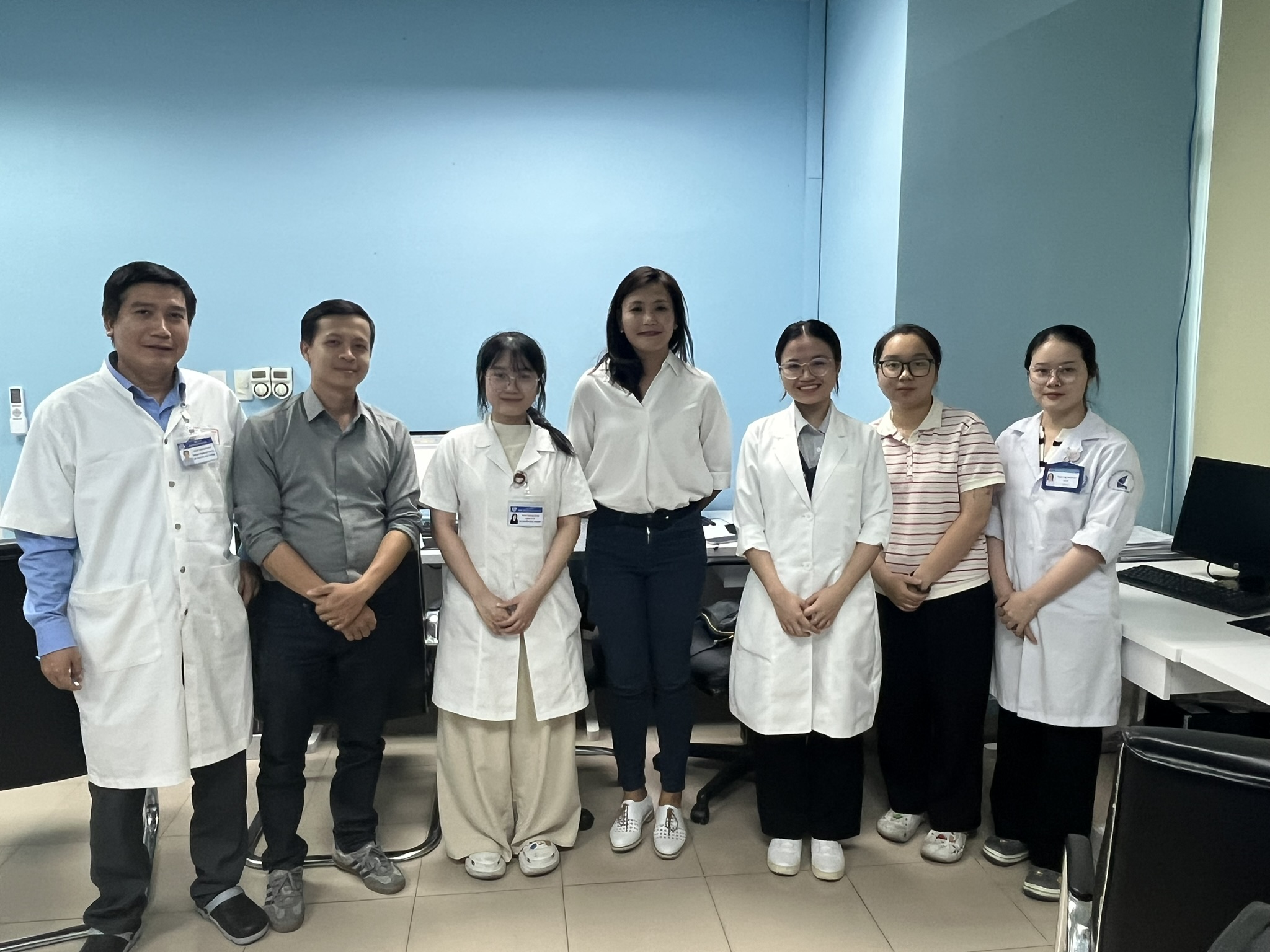
Radiation oncology team
A dynamic investigator network
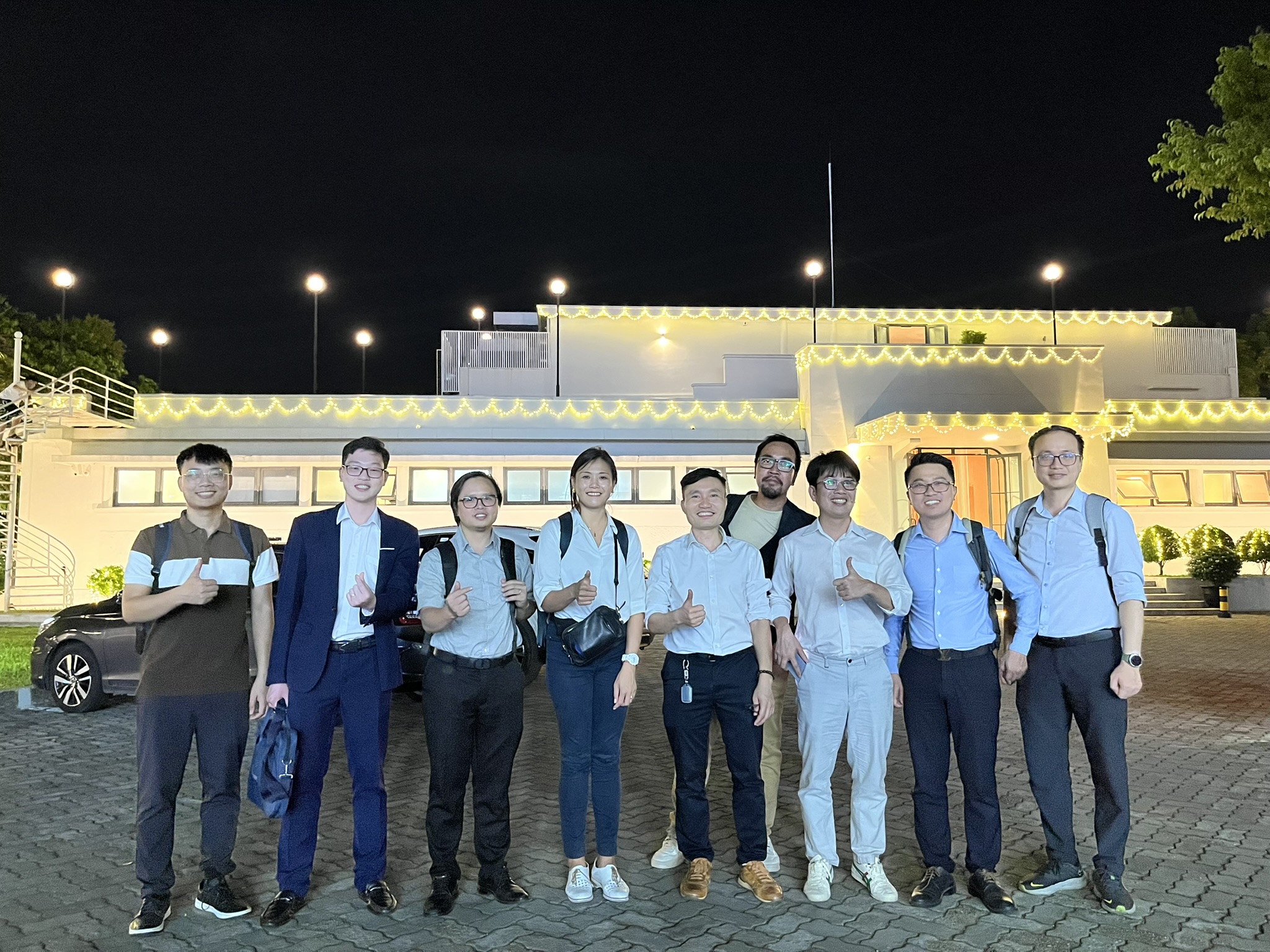
My best encounter of the trip was with the dynamic and scientifically rigorous members of VYPAO, the Vietnam Young Physicians' Association for Oncology: precise questions about trial design, clear-eyed assessment of what their sites can and cannot support.
These are clinicians who intend to generate evidence, not only to consume it. Out of those conversations came the outline of collaborations we will now build together around clinical research projects. That matters beyond the individual studies. Vietnam has a large, often treatment-naive patient population, growing site capacity, and a regulatory environment that has been steadily improving.What it has historically lacked is not talent but a place at the table where research questions are set.
Partnerships that treat Vietnamese investigators as co-authors of the question, rather than as recruitment capacity for someone else's protocol, are how that changes.
What I took home
Two days is not enough to understand a health system, and I make no such claim.
But some things travel.The first is a reminder that the sophistication of an oncology programme is not measured only by what it can prescribe. Huế is doing precision medicine and stereotactic radiotherapy and paediatric transplantation. It is also asking, out loud and in the main programme, what happens to the family, what the patient was actually told, and how a person dies.
Those are not different levels of ambition. They are the same one. The second is that access to care advances the way it advanced in that opening session: one patient at a time, then twenty, then a programme, then a national benchmark.
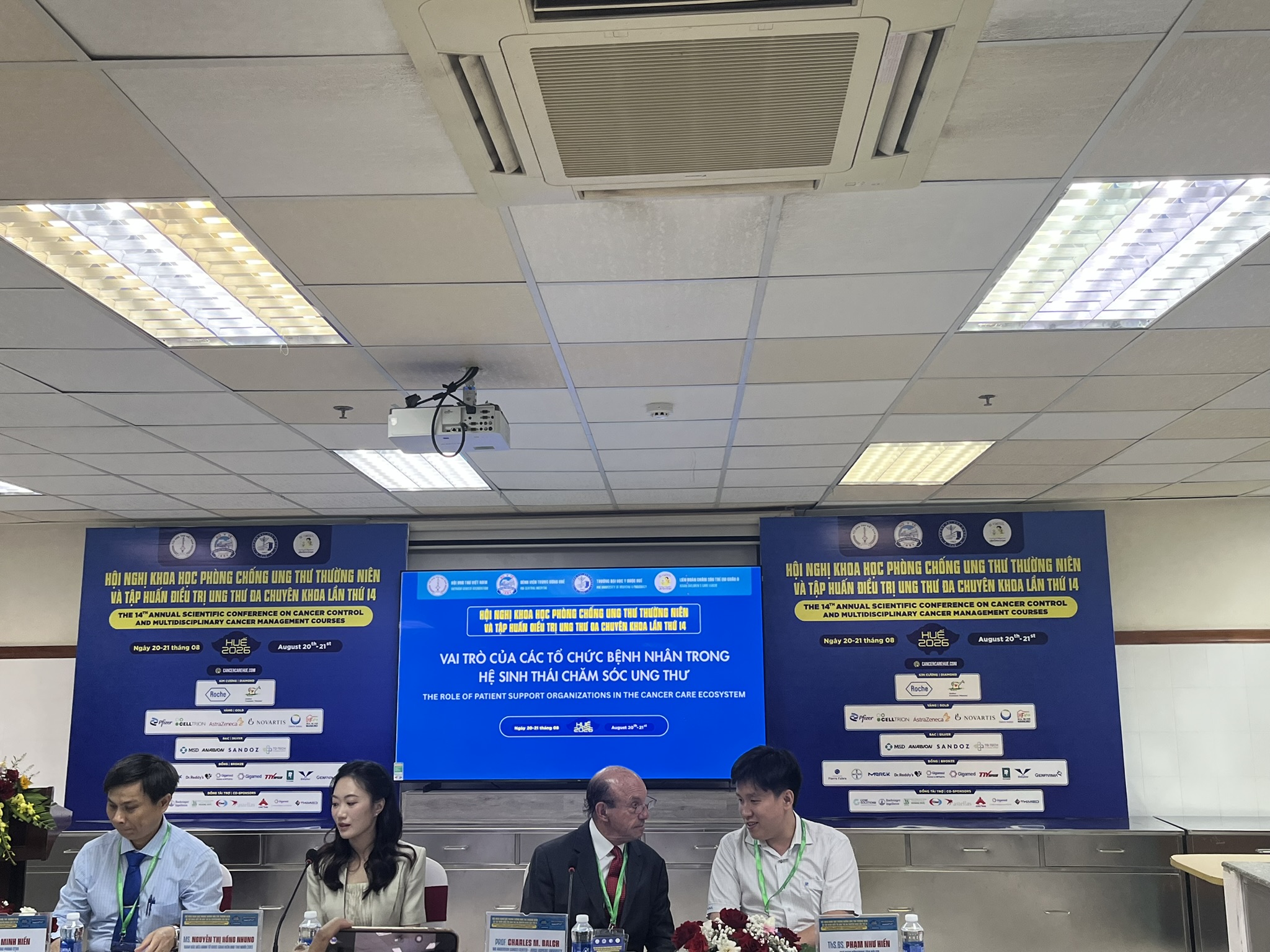
Sincere thanks to Xuan-Dung Ho for the warm welcome, and to the VYPAO members who gave me so much of their time. The beginning of a great adventure. 🇻🇳#Oncology #Cancer #GlobalHealth #Vietnam #VYPAO #Hue
Sources & references
• International Agency for Research on Cancer, Global Cancer Observatory — Viet Nam fact sheet (2024 estimates): https://gco.iarc.who.int/media/globocan/factsheets/populations/704-viet-nam-fact-sheet.pdf
• VietNamNet, “70% of cancer patients fall into financial crisis after one year of treatment,” 2 November 2025: https://vietnamnet.vn/en/70-of-cancer-patients-fall-into-financial-crisis-after-one-year-of-treatment-2458422.html
• JCO Global Oncology, “Radiotherapy and Nuclear Medicine Equipment Shortages in Vietnam: A Critical Gap in Cancer Care” (2025): https://ascopubs.org/doi/10.1200/GO-24-00530
• JCO Global Oncology, “I Wait for Leftover Morphine: A Qualitative Study of Barriers to Safe Opioid Access for Cancer Pain Relief in Vietnam” (2025): https://ascopubs.org/doi/10.1200/GO-25-00026
• Vietnam+, “Hue hospital performs successful bone marrow transplants for three children,” 11 April 2026: https://en.vietnamplus.vn/hue-hospital-performs-successful-bone-marrow-transplants-for-three-children-post340866.vnp
• Vietnam+, “Vietnam performs first-ever mother-to-child bone marrow transplant for Thalassemia despite blood-type mismatch,” 8 September 2025: https://en.vietnamplus.vn/vietnam-performs-first-ever-mother-to-child-bone-marrow-transplant-for-thalassemia-despite-blood-type-mismatch-post326199.vnp
• Elekta, “Hue Central Hospital leads Vietnam's push to advance radiotherapy excellence”: https://www.elekta.com/focus/hue-central-hospital-leads-vietnams-push-to-advance-radiotherapy-excellence/
• Asia Pacific Hospice Palliative Care Network — Hue Central Hospital service listing: https://aphn.org/services/hue-central-hospital/

Sorry, the comment form is closed at this time.